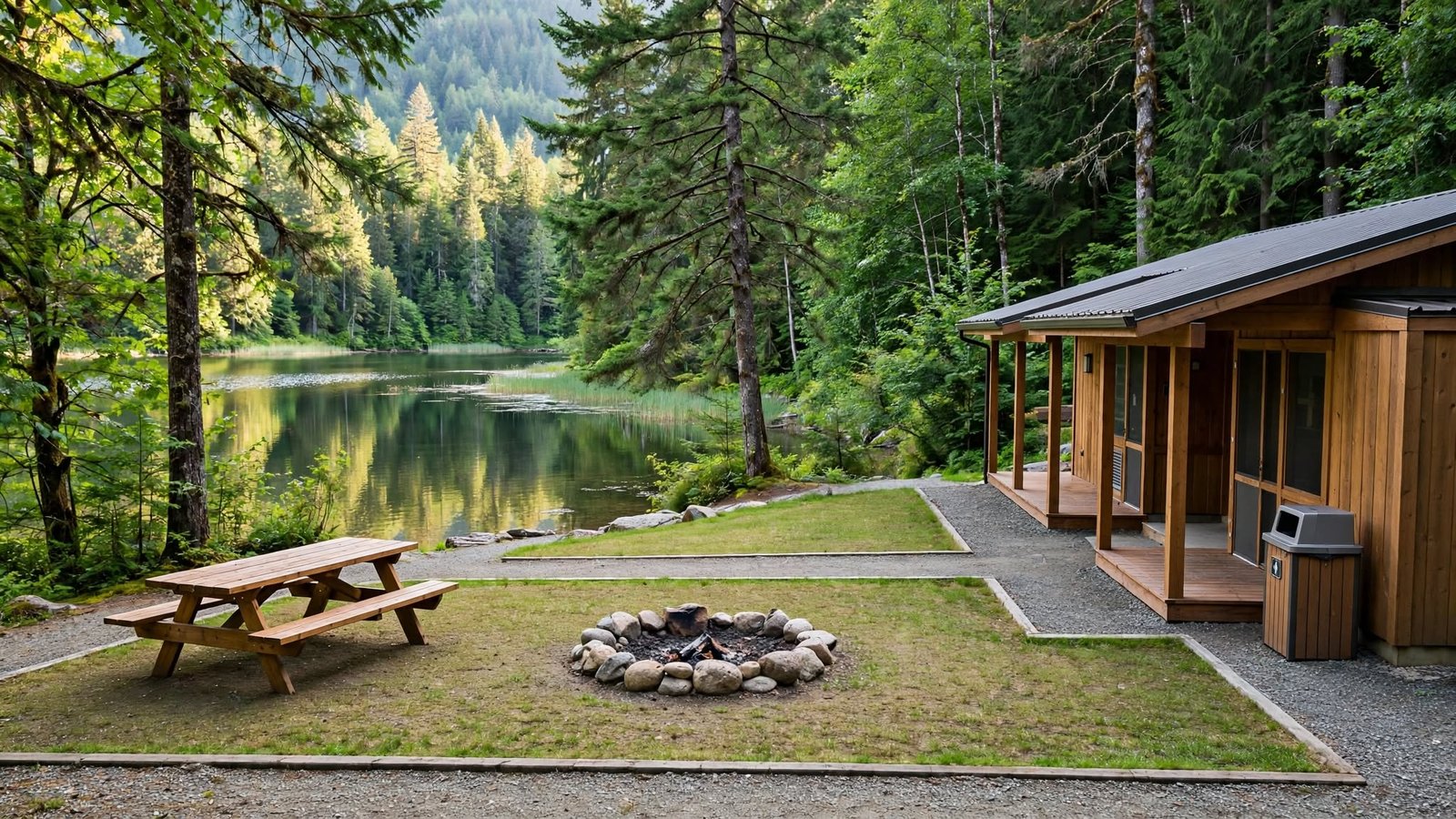
Choosing the right campsite can shape your entire outdoor experience. A campsite is more than a patch of ground where you can pitch a tent or park a camper. Its location, layout, facilities, safety, surroundings, and accessibility all influence how comfortable and practical your stay will be.
What makes a good campsite also depends on the type of trip you are planning. A family travelling with children may value clean facilities and convenient access, while hikers might care more about trail connections and a peaceful natural setting. Understanding the key features to look for makes it easier to choose a campsite that suits your needs without expecting unnecessary luxuries.
A Suitable Location and Natural Setting
Location is one of the first things to consider when comparing campsites. A beautiful setting can add significantly to an outdoor holiday, but scenery should be balanced with practical considerations.
Some travellers prefer campsites close to forests, lakes, beaches, or mountains, while others want easy access to a nearby town. Think about what you plan to do during your stay. If hiking is the main activity, being near suitable trails can reduce unnecessary driving. For sightseeing trips, a campsite with convenient road connections may be more useful than an isolated location.
Consider the Immediate Surroundings
Look beyond the general destination and consider the campsite itself. Uneven terrain, poor drainage, exposed pitches, or heavy traffic nearby can affect comfort.
A good camping pitch should provide enough usable space for your accommodation and equipment. Tent campers generally benefit from reasonably level ground, while caravans and motorhomes need pitches that are practical to enter, leave, and set up on.
Natural shade can be useful during warm weather, although heavily wooded areas may have other considerations, including falling branches and reduced sunlight.
Clean and Practical Facilities
Facilities do not need to be elaborate to make a campsite comfortable. What matters more is whether they are appropriate for the number and type of visitors using the site.
Clean toilets and washing facilities are particularly important for longer stays. Depending on your travel style, you may also want access to showers, drinking water, washing-up areas, laundry facilities, or waste-disposal points.
For caravan and motorhome travellers, practical campsite facilities may include electrical connections, water access, and suitable waste-management services.
Before booking, check exactly which amenities are included. A campsite described as having electricity, for example, may not provide a connection at every pitch.
Safety and Site Management
A well-managed campsite should make it reasonably easy for visitors to understand where to camp, drive, dispose of waste, and find essential facilities.
Clear site rules can also contribute to a safer and more pleasant environment. These might cover vehicle speeds, fires and barbecues, pets, waste disposal, noise, and the use of shared areas.
Check Emergency Access and Information
It is useful to know how emergency situations are handled, particularly when camping in an unfamiliar or remote area. Look for clearly marked entrances and exits and find out how to contact campsite staff when necessary.
Weather and terrain also deserve attention. Low-lying pitches may be less suitable during persistent rain, while exposed areas can be uncomfortable in strong winds. Campers should assess conditions themselves rather than relying entirely on the appearance of a pitch when they arrive.
Enough Space and Privacy
Pitch spacing can have a noticeable effect on the atmosphere of a campsite. Closely packed pitches may be convenient at busy holiday parks but can offer less privacy. More spacious layouts often provide room for outdoor seating, cooking equipment, and children’s activities.
Consider whether pitches are clearly defined and whether vehicles are parked beside accommodation or in separate parking areas. Neither arrangement is automatically better; it depends on whether you prioritize convenience, quieter surroundings, or additional open space.
Noise is another factor. Pitches near entrances, playgrounds, communal kitchens, or service buildings can be convenient but may experience more activity.
Accessibility and Convenient Connections
A campsite should be reasonably accessible for the type of vehicle and equipment you are bringing. Narrow roads, steep approaches, low bridges, or restricted turning areas can create problems for larger motorhomes and caravans.
Accessibility within the campsite matters too. Consider the distance between your pitch and toilets, water points, parking areas, or other facilities you expect to use frequently.
Travellers without a car may want to check access to public transport, walking routes, shops, restaurants, or local attractions. A slightly less scenic campsite can sometimes be more practical if it reduces the need for frequent transport.
Useful Amenities Without Unnecessary Extras
Different campsites serve different types of travellers, so there is no universal list of essential amenities.
Families may appreciate playgrounds, open recreation areas, or family-friendly washing facilities. Campers preparing their own meals may value a shared kitchen or designated cooking space. Wi-Fi can be useful for people who need occasional internet access, while others deliberately choose campsites where digital connectivity is limited.
Rather than choosing the campsite with the longest facilities list, identify which features you will actually use.
Responsible Waste and Environmental Management
A good campsite should provide clear arrangements for rubbish and wastewater. Recycling facilities, designated disposal areas, and sensible rules around fires and natural spaces can help visitors reduce their impact on the surrounding environment.
Campers also share responsibility. Staying within designated pitches, disposing of waste correctly, limiting unnecessary noise, and respecting vegetation and wildlife all contribute to maintaining the site for other visitors.
Choosing a Campsite for Your Travel Style
The qualities of a good campsite are closely connected to the way you travel. A couple staying for one night in a motorhome may have very different requirements from a family spending a week in a tent.
Before making a reservation, consider your accommodation, length of stay, planned activities, transport, cooking arrangements, and preferred level of comfort. Reading the campsite’s current facility information and rules can also help prevent mismatched expectations.
Conclusion
So, what makes a good campsite? The answer is a combination of suitable surroundings, practical facilities, sensible management, adequate space, accessibility, and features that match the needs of the traveller.
The most suitable campsite is not necessarily the one offering the most amenities. A simpler site in the right location may provide a better experience than a highly equipped campsite that does not suit your plans. By checking the pitch, facilities, surroundings, access, safety considerations, and site rules before booking, you can choose a place that supports a comfortable and enjoyable outdoor stay.