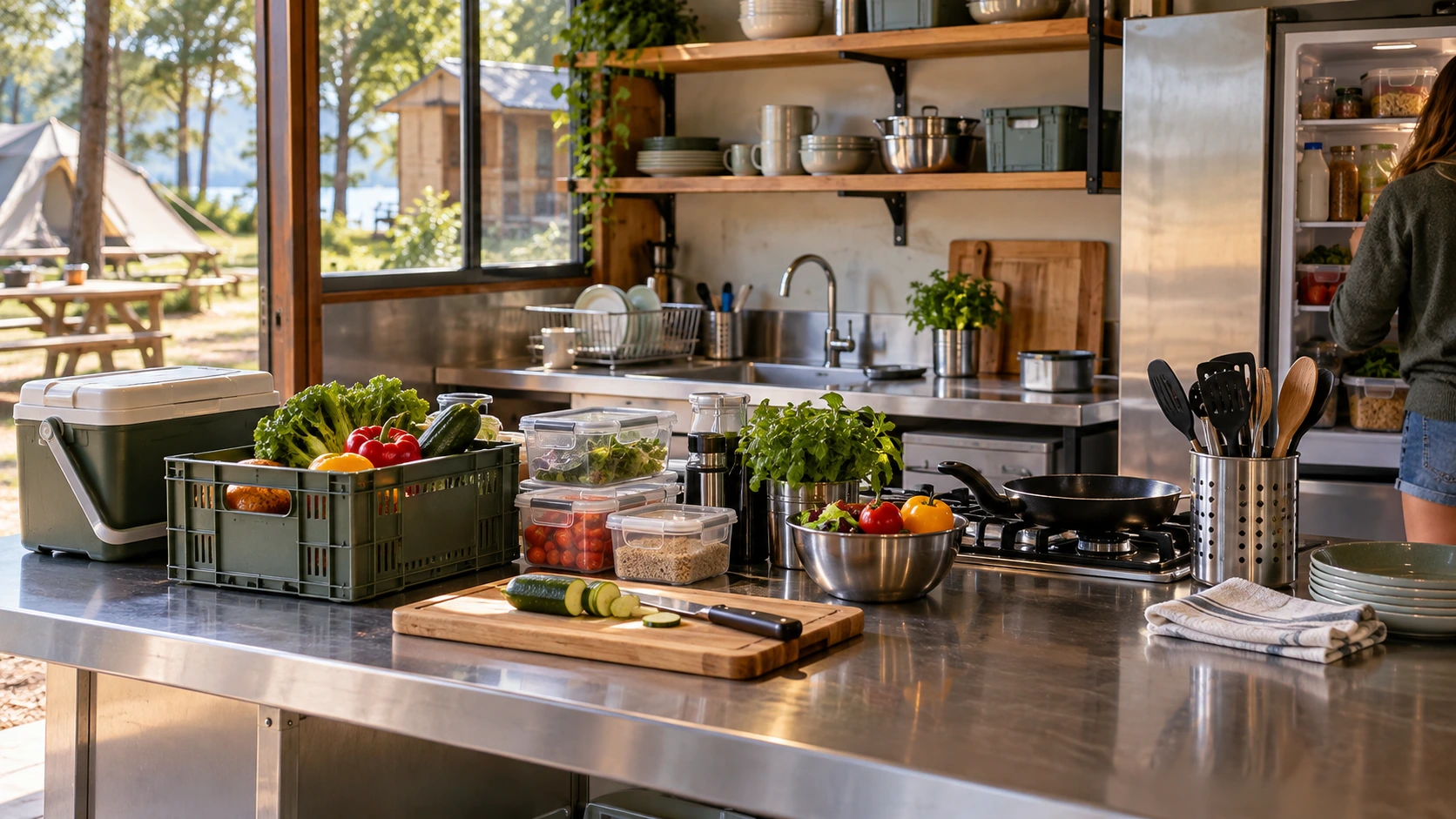
A shared camping kitchen can feel crowded long before every cooker is in use. One family spreads ingredients across a counter, another leaves dishes to dry, and someone arrives with groceries that need a temporary home. Solving storage problems in shared camping kitchens starts with a simple distinction: what needs to stay with you, what needs a few minutes of counter space, and what the campsite actually permits you to leave behind.
Pack for the space you control
Your most reliable storage is usually the space in your tent, caravan, motorhome, or cabin. A shared guest kitchen is useful for preparing meals, but available cupboards, shelves, and refrigerator space vary by campsite. Check the facility information before you travel, especially if your meal plan depends on chilled storage. If the arrangements are unclear, plan meals that work without assuming a dedicated shelf.
Bring a small cooking kit rather than several loose bags. Stackable containers can hold utensils, a sponge, and dry ingredients; one sturdy bag or box makes the whole kit easier to carry back after dinner. Pack only the cookware needed for meals you expect to make. A large collection of pans creates more to store, wash, and keep track of.
Separate food from washing supplies so a damp cloth or leaking detergent cannot reach your ingredients. Keep frequently used items near the top of your kit. This saves you from emptying everything onto a shared counter just to find a bottle opener.
Give each item a clear place during meal preparation
A compact setup makes a busy kitchen easier to share. Before you start, choose one spot for ingredients and another for used utensils, where space allows. Return each item to its bag or container once you are finished with it. Keeping your work area small leaves room for other guests and makes cleanup quicker.
For example, imagine making pasta for a family while another camper prepares breakfast nearby. If your dry pasta, sauce, plates, and utensils arrive in one box, you can take out each item as needed. Spreading several shopping bags across the worktop makes it harder for both groups to cook. The box is a transport and staging tool, not a claim on counter space for the evening.
A few habits help when room is tight:
- Measure or portion ingredients before leaving your pitch if doing so is convenient, and the food can be carried safely.
- Keep a reusable bag for waste and empty packaging until you reach the appropriate bin.
- Wash and pack utensils as soon as you finish using them rather than letting them occupy the sink or drying area.
These steps matter most at busy meal times, when even a small amount of abandoned gear can block the next person.
Treat shared shelves and refrigerators as temporary space
If a kitchen provides communal storage, follow its posted rules before using it. Some facilities may allow labeled food; others may limit storage or reserve areas for particular uses. Do not assume that an unmarked cupboard or refrigerator has space available simply because it is partly empty.
Where storage is permitted, use closed containers and label them with a name and departure date if the campsite asks for it. A label helps distinguish your food from similar items and makes it easier to remove everything when you leave. Place liquids upright and contain anything that might spill. Avoid leaving open packets, loose produce, or bulky packaging that takes more room than the food itself.
Refrigerator space calls for extra restraint. Chilled food needs suitable storage, but a shared refrigerator may already be full when you arrive. Buying smaller quantities for the next meal can be more practical than arriving with several days of perishables. If you use a cooler, follow its instructions and pay attention to whether it can keep the food at an appropriate temperature for the time you need. A cooler is not automatically a substitute for a refrigerator.
Plan meals around the facilities you find
Storage becomes a bigger problem when the menu demands more equipment and ingredients than the kitchen can comfortably handle. Choose a few meals that use overlapping staples, such as the same vegetables in a simple lunch and evening dish. That reduces half-used packages and the number of containers you carry.
At the campsite, camping guests have access to a guest kitchen with ovens, and a grocery shop is across the road. Those details can help with meal planning, but they do not establish how much food storage is available in the kitchen. A camper could bring shelf-stable basics and buy fresh ingredients closer to cooking time, while checking the kitchen’s current storage arrangements before relying on them.
Think about the route back to your accommodation as well. A meal that needs one pan and a few utensils is easier to carry and put away than one requiring several trays, bowls, and appliances. Cooking in smaller batches may take longer, but it can reduce clutter when several groups need the same work area.
For more detailed information on this topic, read our guide on How to Make a Cabin Holiday More Comfortable and Enjoyable.
Leave the kitchen ready for the next guest
Shared kitchen storage works only when items move on promptly. After eating, check the counter, sink, oven area, shelves, and refrigerator for anything you brought. Wipe the surface you used and take your food, cookware, and cleaning kit back with you unless the campsite explicitly allows storage between meals.
Before checkout, make a final sweep for labeled containers and leftover ingredients. A tidy departure prevents waste and keeps limited space available for the next arrival. With a compact kit, a modest meal plan, and attention to the kitchen’s actual rules, even a small shared space can be straightforward to use.